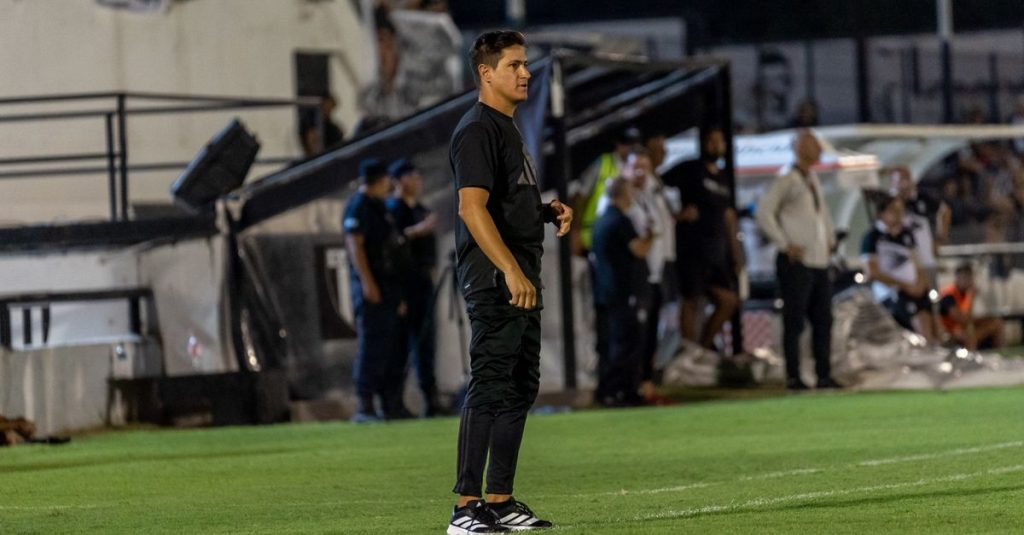
Andoni Iraola’s rise to Liverpool began with a sacking. Seven years ago, he lost his first job in management at AEK Larnaca in the Cypriot top division after a winless run of six league games. Now he is at Anfield, having rebuilt his career in Spain with Mirandes before impressing at Rayo Vallecano and Bournemouth.
The final straw came in January, when Larnaca drew 2-2 at home to Ermis Aradippou. That side would go on to finish bottom of the table. The result extended the winless streak to six games, and Iraola paid for it with his job.
Signs of a Coach in the Making
Were there clues beyond the results that Iraola was destined for bigger things? David Catala, who played under him at Larnaca, including in that final game, says he saw promising signs. “He already had very clear ideas of what he wanted,” Catala says. “You saw it and, for sure, all the players were speaking about how he was going to become a fantastic coach. But to reach this level? To say that he would be at Liverpool? That is a big claim.”
Iraola had spent his entire playing career in Europe at Athletic Club, with a brief spell in the United States at New York City. Management at Larnaca took him outside his comfort zone, although the club had a Spanish contingent.
His early impact was strong. He negotiated three rounds of qualifying to reach the Europa League group stage, with wins over Dundalk, Sturm Graz and Trencin. The players quickly embraced his ideas. “To be in the Europa League for a club in Cyprus was amazing,” Catala says. “And the work that he did was good. These were the same ideas that he wants at Liverpool, actually, pressing high and wanting to be very aggressive with and without the ball.”
A Different Tempo
That approach was rare in Cyprus. “The rhythm of the game there was very slow,” Catala says. “I was able to play there until I was 38 years old because that rhythm was not so high.” Iraola had learned a more demanding style under Marcelo Bielsa at Athletic Club.
“Everything was more explosive with him, more rhythm, more intensity,” Catala says. “You saw how Marcelo did it with Athletic Club. I remember sometimes it was like that for us. Crazy things like following man-to-man all over the pitch. That was crazy as players.” Catala believes that style anticipated where the game was heading. “Football has gone in that direction. The way you have to press. It changed the mentality of the players.” He adds that Iraola “changed a little bit the rhythm of the league in Cyprus.”
How the Season Unravelled
For a time, the system worked. At the start of December, with 10 games played, Larnaca sat second in the table behind Limassol, the only team to beat them in that period. They were actually ahead of six-time reigning champions and eventual title winners APOEL.
Then it collapsed. A 5-1 home defeat to Bayer Leverkusen in Europe came between three away trips on the island that produced no wins. A home defeat by the odd goal raised the pressure before the brief Christmas break. A loss away to Omonia, followed by the draw against Ermis, sealed his fate. Iraola made some formation changes, but nothing major. “He did not change too much in terms of his thinking about the way of playing against different teams,” Catala recalls.
The lesson was that pressure arrives quickly in football, even in a league that was far from the spotlight. “If you are not getting results, it is difficult to have the trust of the owners,” Catala says.
Instability in Cyprus
Catala says the environment made life hard for young coaches. “Cyprus is very difficult for coaches, and especially for young coaches, because the owners of the football clubs, they are very passionate. And at the moment that you are not getting the results, they sack the coach like they are just peanuts.
“As soon as you lose games, especially against the lower teams, immediately the fans are speaking with the owner and the owner is going crazy. You cannot have the stability that maybe you need when you are a young coach. This is what happened to Andoni.”
Catala, who later managed Larnaca himself and lasted somewhat longer than Iraola, believes his former coach still gained valuable experience there. “It was still a good choice to start there,” he insists. “Cyprus is not an easy place for anyone to work but it is a good place for a young coach to start their journey. He had the opportunity to coach a team in the Europa League, for example. Unfortunately, football everywhere is now very unstable for all coaches.
“It was a short period. But he would have learned many things from his experience in Cyprus about how to manage situations. It was his first job, you have to take something from that. For sure, he has improved a lot since then and he has developed himself.”
Catala now watches his former coach reach the top of the English game. “I am happy for him. If you look at the last years, you can see that he is obviously a fantastic coach. I cannot say that I did not expect it, but it is a little bit of a surprise.” From the sack at Larnaca to Liverpool, the journey is remarkable, yet Catala’s early read suggests it was not entirely unforeseeable.